


“Co-Founders Arjun Sara and Wamika Bansal of Design Dual approach futuristic architecture through conscious restraint. By blending innovation with practicality, sustainability with craft, and precision with emotion, they create timeless spaces that balance modern expression with contextual sensitivity.”
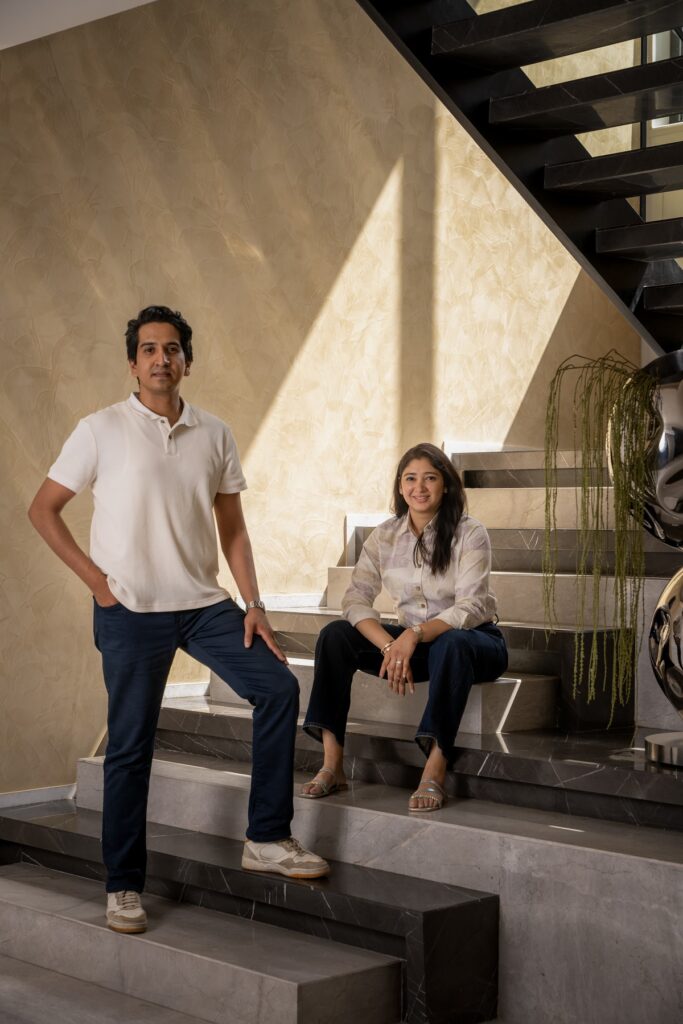
Design Dual Arjun Sara & Wamika Bansal Co Founder and Principal Architect
How would you define “futuristic architecture” in today’s context?
Futuristic architecture today is not about eccentric forms or sci-fi visual language. It’s about conscious design. It means creating spaces that are intelligent, contextual, material-aware, and emotionally resonant. At Design Dual, the future is defined by clarity, craft, and thoughtful restraint.
What philosophies or inspirations shape your contemporary design approach?
Our philosophy is deeply rooted in contrast – light vs dark, solid vs void, crafted vs industrial. We draw inspiration from textile weaving, traditional crafts, and elemental geometry. We believe a space must be emotionally intelligent and visually quiet.
How do you balance innovation with practicality in your projects?
We see innovation not as spectacle but as precision. Innovative ideas are always tested against real-world constraints: functionality, budget, climate, and construction feasibility. It could be a unique material application, a reimagined spatial flow, or a fresh take on detailing, but it must ultimately enhance how the space feels and functions.
Can you share a recent project that reflects your futuristic vision?
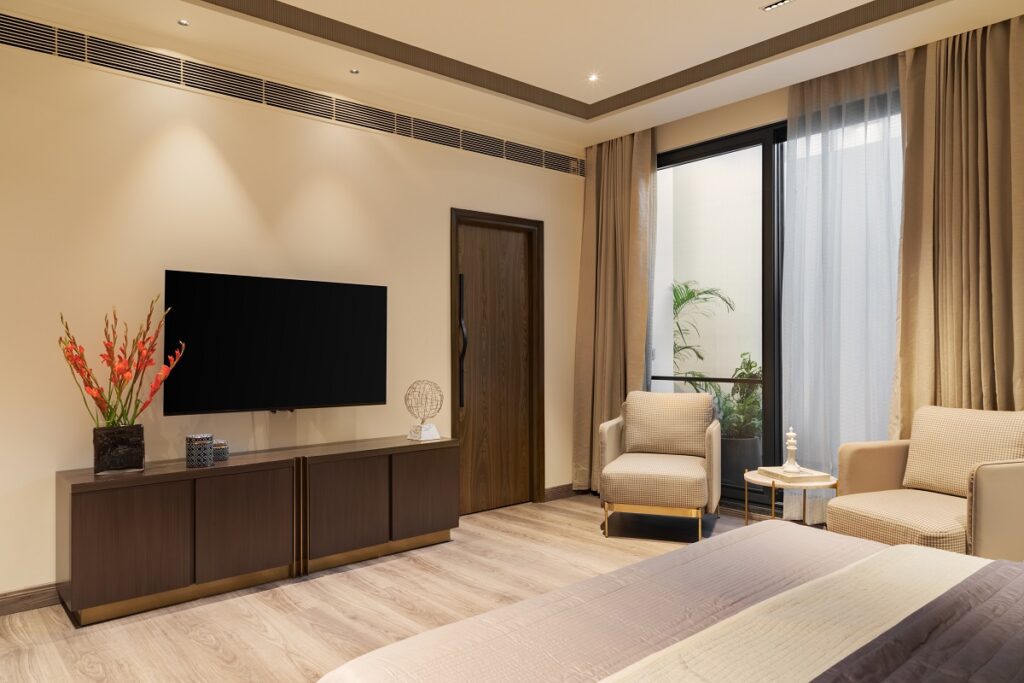
Our recent residential project, ‘Rampath Residence’ captures our futuristic lens. The home doesn’t rely on ornamentation but on strong material storytelling. The black metal plate box, suspended above the façade line and the crown’s shadow gap are futuristic moves where practicality meets poetry. The terrazzo flooring across levels with varied patterns, and the colored metal plates on the pergola, show how we create immersive experiences through modern interpretations of craft and form.
How are sustainability and technology influencing your design process?
We use sustainability as a lens of longevity through local materials, thermal performance, and detail-led efficiency. Technology plays a role in how we fabricate, laser-cutting, modular metal assemblies, and precision stonework. The result is an architecture that performs quietly and endures aesthetically.
What materials or techniques are you experimenting with currently?
Lately, our focus has been on textural finishes, hybrid material assemblies, and crafted surface treatments that create depth and character without excess.
On the architectural front, we’re experimenting with perforated metal systems, modular stone cladding, and new applications of natural materials like lime plaster and micro-concrete for their earthy tactility and thermal performance. In interiors, we’re working with custom terrazzo, layered wood detailing, and hand-finished metal accents to bring in a sense of craft and individuality.
We’re also engaging with digital fabrication techniques such as CNC milling and laser cutting, not just for precision, but to translate traditional ideas into contemporary expressions. For us, the aim is to find a balance between the raw and the refined, using materials in ways that feel both rooted and forward-thinking.
What do you believe the next 5–10 years of architecture will look like?
The coming decade will see architecture become more visceral – less about the visual spectacle, more about materiality, experience, and emotional context. Buildings will speak softly but powerfully. We’ll see bio-materials, modular methods, and culturally-rooted craft making a comeback. The future will belong to designs that age well, respond to climate and feel personal.
Any advice for young designers aiming to break conventional design patterns?
Learn the rules before you break them. Don’t chase trends, chase clarity. Good design comes from observation, empathy, and iteration. Draw by hand, understand your material, and always ask: what does this space feel like to inhabit? At Design Dual, we break conventions not for attention, but to create resonance and we encourage young designers to build that mindset first.