

Mr. Manoj Lohia, Director, Merino Industries Ltd.

There’s a certain magic that happens when you walk into a space that just feels right. You can’t always put your finger on it, but something in the textures, the colours, maybe even the mood of the room seems to speak to you. It’s familiar but fresh. Local, yet worldly. That’s the quiet power of culture in design. It doesn’t need to announce itself. It hums in the background, setting the tone. Over the past few years, commercial spaces across the world have undergone a fascinating shift. The neutral, corporate “global aesthetic” is slowly giving way to something more rooted, more intimate – more human. Designers are no longer hiding culture in the corners. They’re letting it shine at the centre.
The World is Local Now
In an age where boundaries blur and businesses cross borders effortlessly, design sensibilities are becoming more hybrid than ever. Yet amidst this globalisation, there’s an increasing return to local roots. Right from the resurgence of natural textures or the reinterpretation of ethnic motifs in high-end interiors, regional aesthetics are not merely being preserved: they’re being reimagined. Interior designers and architects are consciously integrating indigenous ideas and tactile traditions into commercial environments. This isn’t mere tokenism. It’s a shift in design philosophy – one that recognises the value of storytelling, soul, and context.
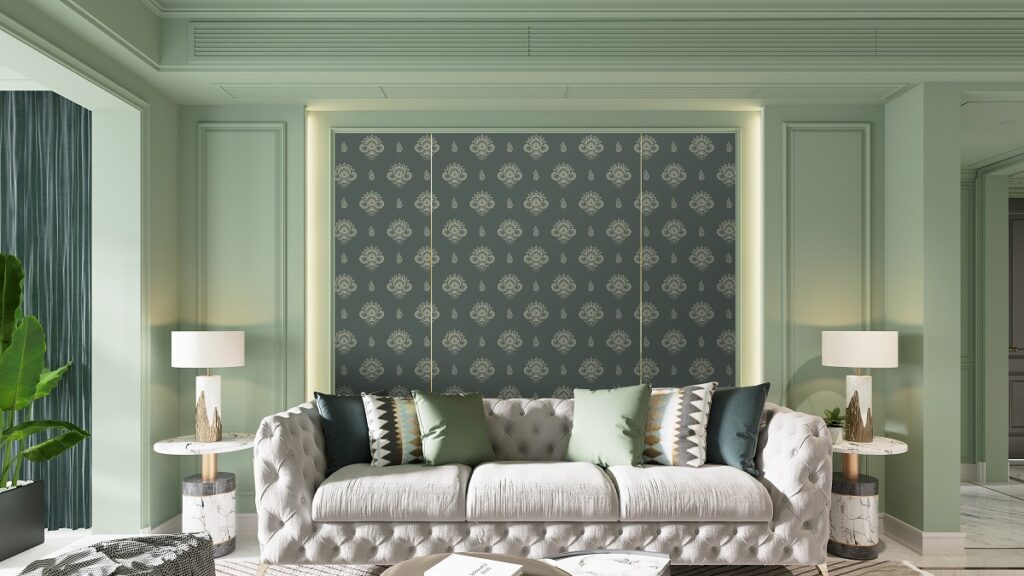
Take for instance surfaces that quietly pay homage to ancient textile arts: threads of inspiration drawn from the delicate grace of Chikankari or the rhythmic geometry of Ikat. These patterns aren’t merely printed. They’re interpreted into layered textures that feel almost handwoven, even in their laminate form. They bring with them a sense of place, of origin, and of subtle opulence that resonates globally.
When Material Meets Memory
Modern commercial spaces must cater to diverse human experiences. But it’s the materials within these spaces that often evoke the deepest connections. Today’s surface solutions don’t merely perform well. Instead, they express. You can consider a matte surface that softens light and invites touch. Its velvety texture resists fingerprints and minor abrasions, making it perfect for high-traffic, high-touch environments like reception desks, co-working booths, or retail counters. But beyond practicality, it brings a sensorial calm. There’s something deeply comforting about its understated elegance – akin to natural stone worn smooth by time.
Then there are metallic finishes, not overtly shiny but artfully subdued offering the visual intrigue of burnished copper, oxidised bronze, or brushed steel. These ain’t surfaces that scream luxury. They whisper it. Their reflective textures and changing tones invite curiosity, allowing designers to layer sophistication in subtle, spatially intelligent ways.
In contrast, high-gloss finishes speak a different language i.e. more urban, more contemporary. They reflect not just light but also energy, making them ideal for dynamic environments like showrooms, studios, or tech-led offices where innovation is the mood.
Colour as a Cultural Connector
The role of colour in culturally-influenced design cannot be overstated. Certain shades carry the weight of memory, region, and ritual. Ochre Gold, Maren Marble, Shibori Blue, Springfield Walnut & other shades stand out for the element they offer. When brought into modern commercial settings, they don’t only provide warmth. They carry cultural echoes. A deep maroon used in a law firm’s lobby might remind one of temple doors in South India. A delicate shade of pink in a beauty salon could trace its roots to Rajasthani frescoes. Even minimalist greys and beiges when balanced with warm wood grains or stone textures evoke a timelessness rooted in natural palettes. Many designers today curate spaces that mix and match these tones across a wide shade spectrum, sometimes within the same project using the darker hues to anchor seriousness and the lighter shades to bring in airiness and calm.
Tactility & Tech: The New Design Binary
Another exciting frontier in commercial design is the merging of craftsmanship-inspired aesthetics with advanced technology. Laminate surfaces that appear woven, embossed, or chiselled are actually engineered with high precision to withstand wear, repel moisture, and maintain consistency in different climates. Some newer materials even allow for writable surfaces: imagine brainstorming walls in modern offices that are not just functional but styled to match the interior language. Others come with antibacterial properties or moisture resistance, making them ideal for wellness spaces, hospitality kitchens, or public restrooms without compromising on elegance. What this unison of tradition and innovation offers is simple: the ability to honour beauty while solving real-world problems.
Designing for Personas
One of the most compelling tools designers now use is thematic personas to guide material selection. Think of categories that cater to specific sensibilities: the free-spirited creative, the understated luxury seeker, the meticulous perfectionist, the nature-loving minimalist. For instance, someone drawn to clean Scandinavian interiors might gravitate toward soft-touch finishes in desaturated pastels and tactile woods. Meanwhile, a retail brand seeking a more dramatic identity might opt for contrasting textures — sleek gloss paired with rustic grain or infuse the space with layered patterns reminiscent of ethnic embroideries. Through providing surface libraries that let designers visualise how these personas might come to life – across colour, finish, and texture – the design process becomes more intuitive, more personalised, and more expressive.
An Ode to Indian Art & Tradition
Perhaps one of the most touching developments in this scene is the way Indian traditions are being reinterpreted for the world stage. Not merely as a piece of Indian art & tradition, but as living, breathing design languages. Surfaces inspired by heritage & Maharaja palaces that imbibe the best of Indian culture, are making their way into Indian homes. They carry with them stories. Of hands that once wove, carved, dyed, or painted. Of motifs that held symbolic meanings. Of cultural rituals encoded into visual language. This can’t be called mere nostalgia. It’s evolution. A respectful, modern reincarnation of tradition that feels just as relevant and timeless as our roots as a whole.
As commercial design continues to become something greater & grow, the most memorable spaces will be those that celebrate this hybridity: the interplay of region and reason, craft & code, memory and modernity. Today, the world doesn’t just want beautiful spaces. It wants spaces that feel real, rooted, and resonant. Spaces that have character & spaces that tell stories, not mere timelines. And in that, cultural influence isn’t your ordinary aesthetic tool. It’s infact, a powerful design compass. One that ensures commercial spaces don’t just look good but feel like they belong. Everywhere. And to everyone.