


“Vinod Singhi, Founder & Principal Architect of Basics Architects, believes the future of architecture lies in returning to fundamentals—habitability, sustainability, and human well-being—while embracing innovation that serves people and the planet. His Nature-Integrated Design philosophy blends timeless wisdom with modern technology, creating spaces that are resilient, adaptable, and always relevant.”
How would you define “futuristic architecture” in today’s context?
Futuristic architecture today is less about dramatic shapes and more about how buildings can adapt and stay relevant over time. It is about being resilient, people-focused, and sustainable.
A futuristic building should work for today and also be ready for tomorrow. Technology is useful only when it makes life easier, not just to look fancy.
What philosophies or inspirations shape your contemporary design approach?
The design philosophy at Basics Architects is what we call Nature-Integrated Design. It has two parts—habitability and sustainability.
Habitability means creating spaces that are healthy, comfortable, and easy to use. Sustainability means conserving resources and designing in harmony with the environment.
We also draw inspiration from nature and traditional architecture, which often provide smart and timeless solutions that still work beautifully today.
How do you balance innovation with practicality in your projects?
We always start with the basics—safety, comfort, and function. Once these are in place, we add innovation through materials, smart systems, or creative ideas.
Innovation works only when it is practical, buildable, and easy to maintain.
Can you share a recent project that reflects your futuristic vision?
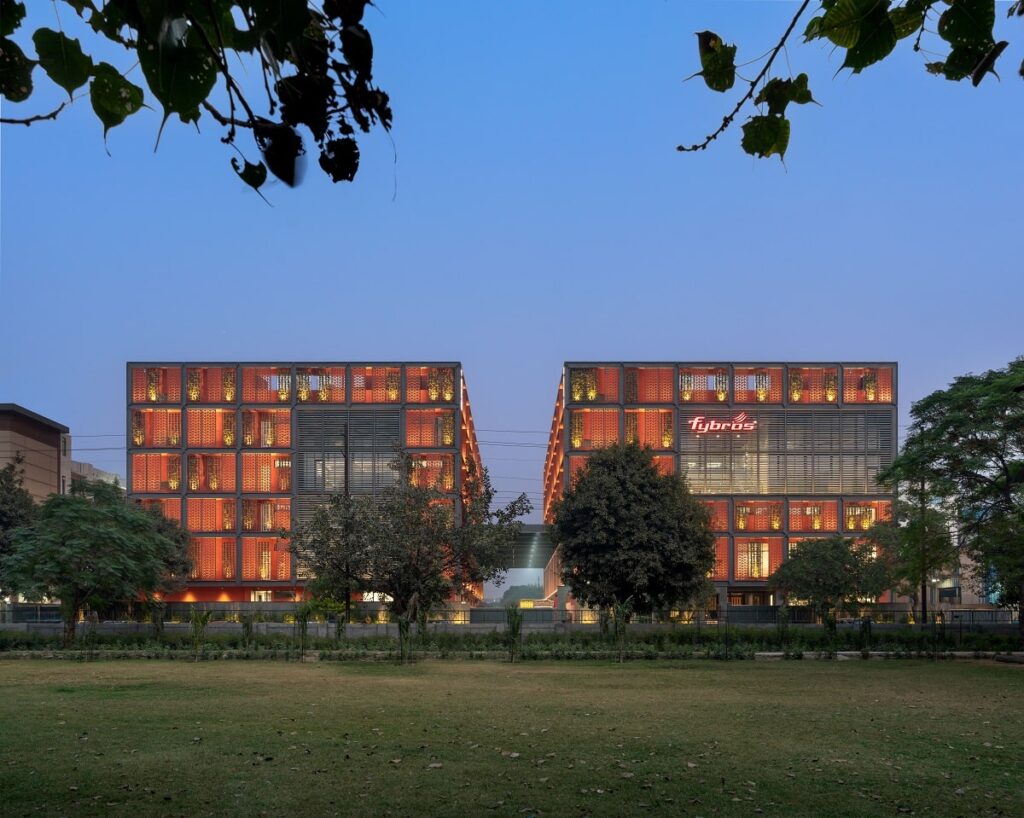
The twin habitat in Noida is a good example.
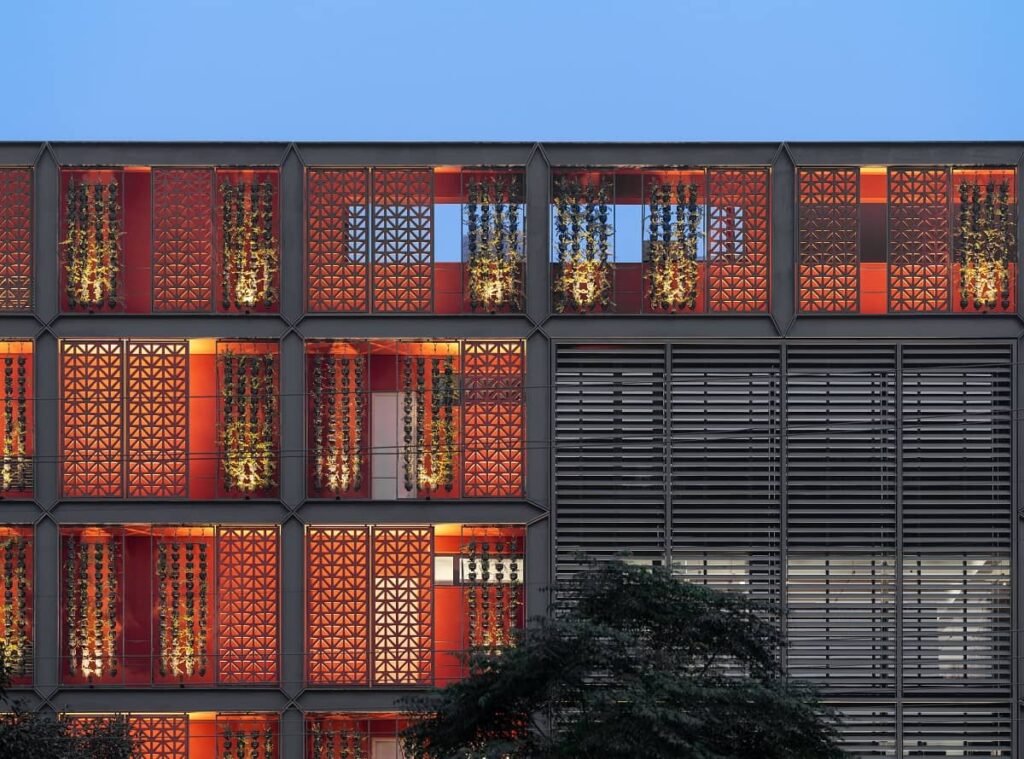
It has a double-skin façade with green cover that lowers heat and improves air quality. Inside, smart lighting and natural ventilation reduce energy use.
The interiors are open and flexible, encouraging teamwork and collaboration. It shows how technology, sustainability, and user comfort can come together.
How are sustainability and technology influencing your design process?
Sustainability is now at the heart of every project. We focus on saving energy, managing water, and improving indoor air quality.
Technology helps us refine these ideas. We use simulations to test performance and digital tools to coordinate better, which also reduces waste.
What materials or techniques are you experimenting with currently?
We are exploring second-skin façades that use parametric design for both looks and performance.
Prefabrication and modular systems are another focus—they save time, reduce waste, and improve quality. Alongside, we use natural finishes and materials that add warmth while being eco-friendly.
What do you believe the next 5–10 years of architecture will look like?
The future will be a mix of high-tech and low-tech.
Smart systems, new materials, and AI will become more common. At the same time, simple ideas like courtyards, shading, and natural airflow will return, especially with climate change in mind.
Architecture will move towards adaptability, resilience, and well-being.
Any advice for young designers aiming to break conventional design patterns?
Design is not about being flashy, it’s about making a difference.
Focus on ideas that improve daily life and protect the planet. If you stay true to that, your work will always stand out.