

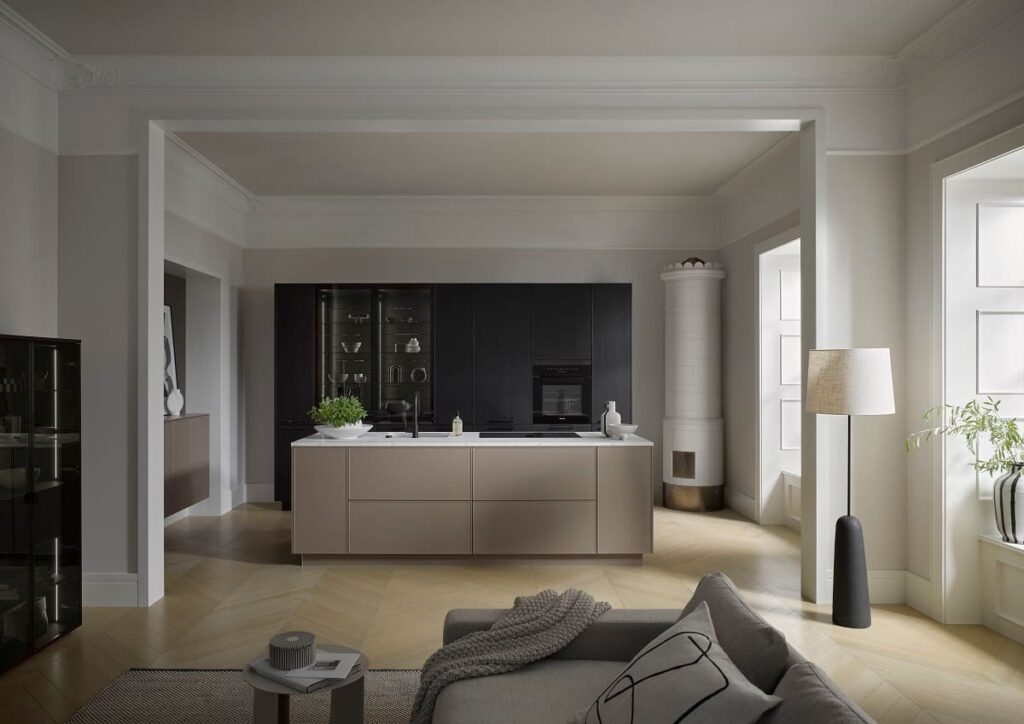
The relaunch of the German-engineered kitchen brand positioned the space not as a showroom, but as a calibrated environment — one where storage logic meets sensory memory, and where systems quietly choreograph everyday life.
The System as Philosophy
Founded in Germany, Häcker Küchen has long been associated with precision manufacturing and intelligent modular engineering. But in Mumbai, the narrative extended beyond hardware. The kitchen was framed as infrastructure for living — a space where movement, pause, interaction, and habit converge.
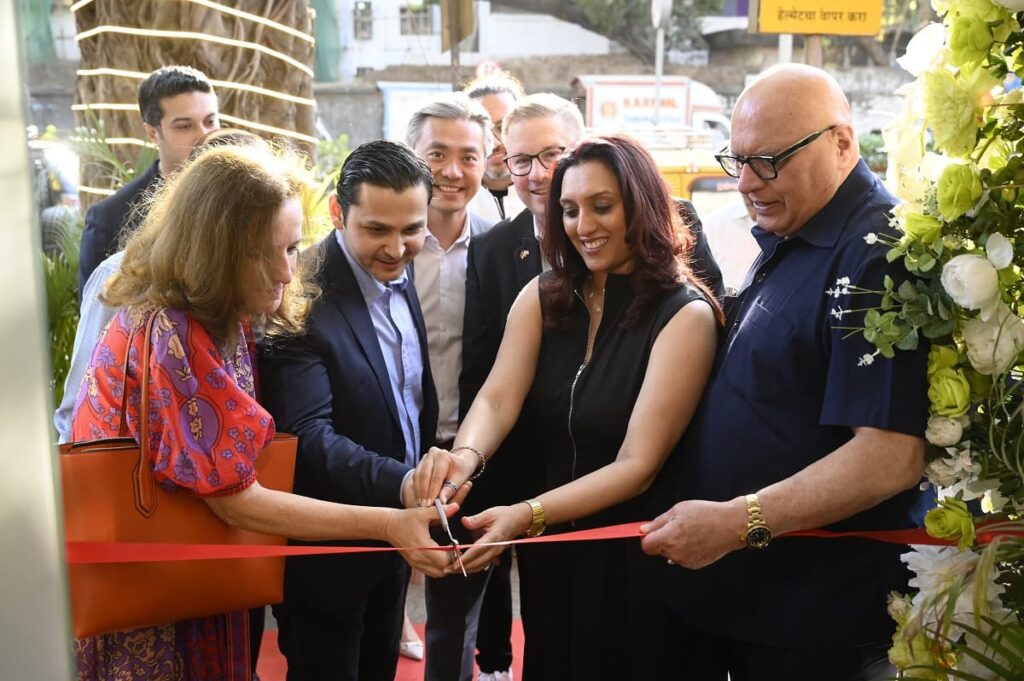
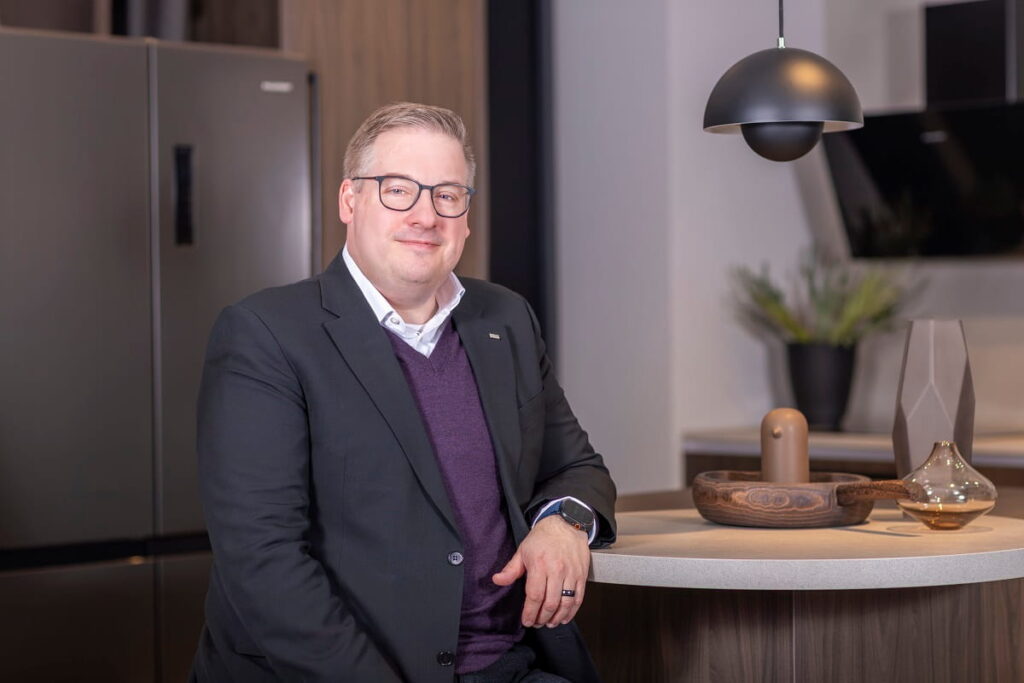
Leadership from Häcker’s Indian and global teams, including Captain Mukesh, Gandharv Mal, Anubhav Mal, Kanupriya Mal, Ashish Mahajan, and Xiaoming Bai, were present, reinforcing the brand’s long-term vision in India. From Germany, Thomas Klee, Head of Sales – APAC & MEA at Finkemeier Holding GmbH & Co. KG, joined the evening alongside Mauro Trevisan and Silvia Scudiero, Export Managers at Flou — a reminder that the conversation extends far beyond one geography.
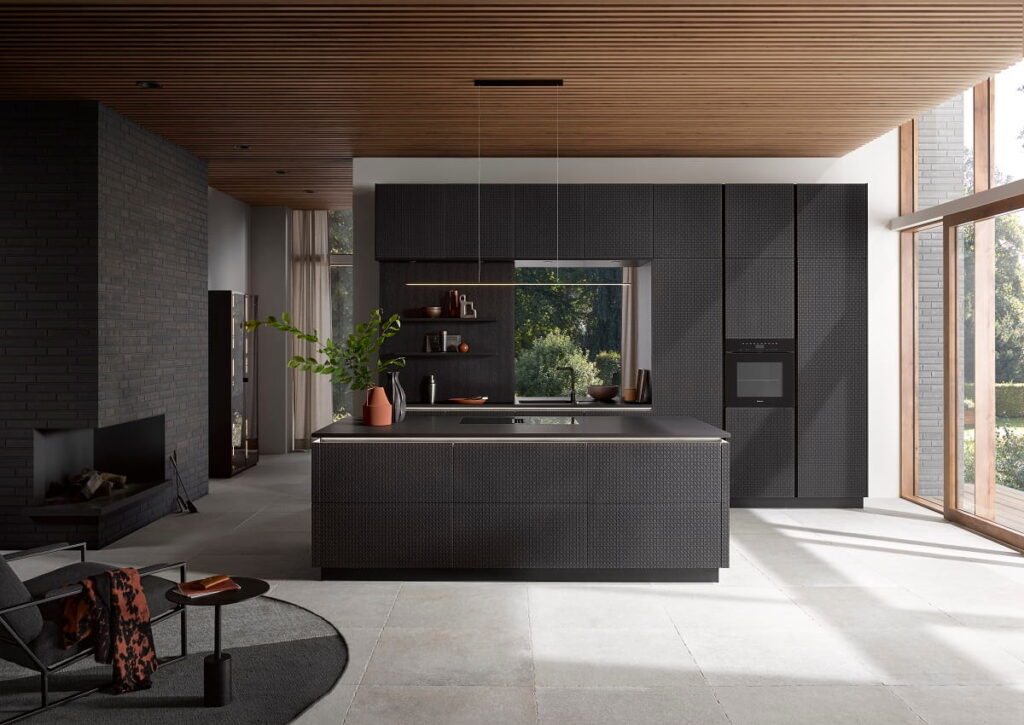
Integrated within the displays were appliances by Gaggenau, seamlessly embedded rather than appended. Alongside, Resyde extended the spatial language into living environments. The result was not a showcase of brands, but a unified ecosystem.
The gathering reflected the breadth of Mumbai’s design community. Among the notable attendees were Pushyamitra Londhe, Ruchi Sharma, Anjali Rawat, Khushboo Khandelwal, Lalita Tharani, Neeta Sarda, Sunil Jasani, Ritu Goregaonkar, Komal Sachdev, Megha Bhatia, Rohini Bagla, R.L. Narayan, Girish Chatpar, Janhavi Wadhwani and Neha Garg — each representing distinct design perspectives across residential, luxury, and bespoke architectural practices. Their presence underscored the significance of the relaunch, positioning it not merely as a brand moment, but as an industry convergence.
The evening carried the energy of collective authorship. Conversations unfolded between display islands and appliance walls, not in hushed admiration, but in informed exchange. Materials were discussed. Workflows debated. Global benchmarks referenced. What emerged was not passive observation, but active participation — the kind that defines serious design ecosystems.
The Kitchen as Dialogue
At the centre of the evening was The Insight Hour, a roundtable moderated by Sumessh Menon. Architects including Maria Leon, Shilpa Jain Balvally, Santha Gour, Rohit Bhoite, Ahmad Furniturewala, Rajiv Shroff, Kaushik Wadhwana, Karan Desai, Kavita Talib, Krish Kothari, and Anjali Shah examined how integrated systems are reshaping domestic architecture.
The discussion moved beyond specification. It questioned behavioural design. How does a kitchen anticipate movement? How does it enable rhythm rather than interrupt it? When does technology disappear into instinct?
Performance, Not Presentation
If conversation framed the kitchen intellectually, Roast with Ratnani translated it into action. Led by celebrity chef Vicky Ratnani, the display kitchen transformed into a working stage. Architects navigated preparation zones and concealed storage with intuitive ease. Every movement reinforced the same message: efficiency should feel effortless.
There was also an unspoken acknowledgment of evolution. The contemporary Indian home is no longer an imitation of global typologies; it is a confident hybrid. In that context, Häcker’s positioning felt intentional. The brand did not attempt to overwhelm with excess. Instead, it leaned into discipline — measured proportions, integrated technologies, and systems that respond to real patterns of use.
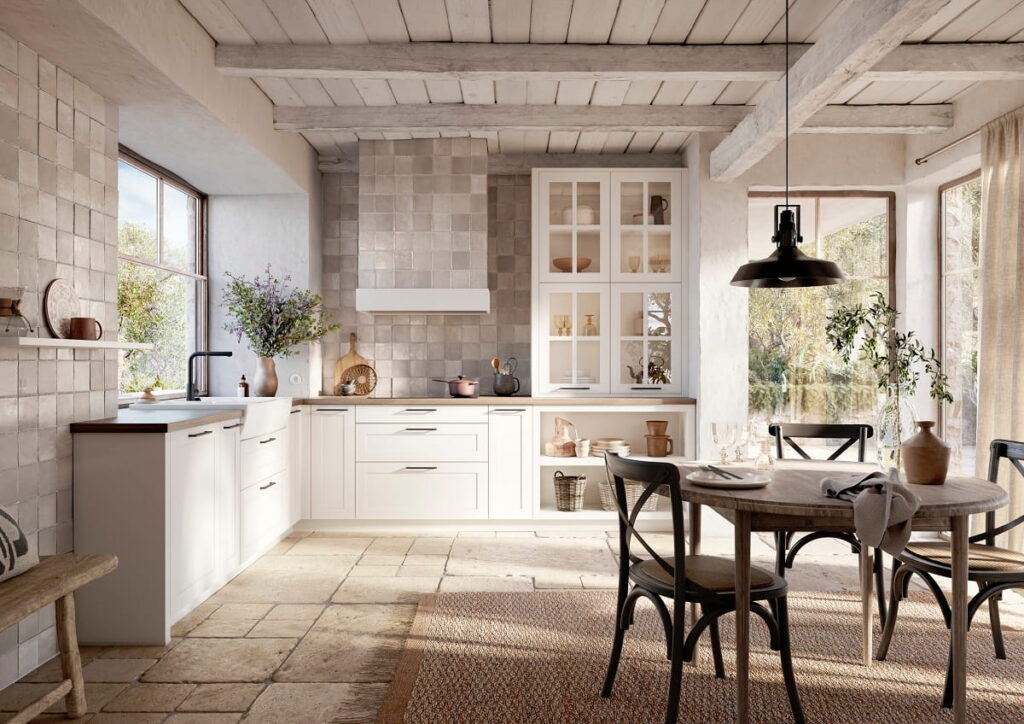
In an era where luxury often equates to visual opulence, this restraint felt almost radical. Surfaces did not shout. Mechanisms did not announce themselves. Everything operated with quiet assurance — suggesting that true refinement lies not in ornamentation, but in calibration.
The relaunch ultimately did not rely on spectacle. It relied on confidence. Häcker’s Worli address re-emerged as a study in restraint — proving that when engineering aligns with emotion, the kitchen becomes more than a room. It becomes architecture in its most lived-in form.